
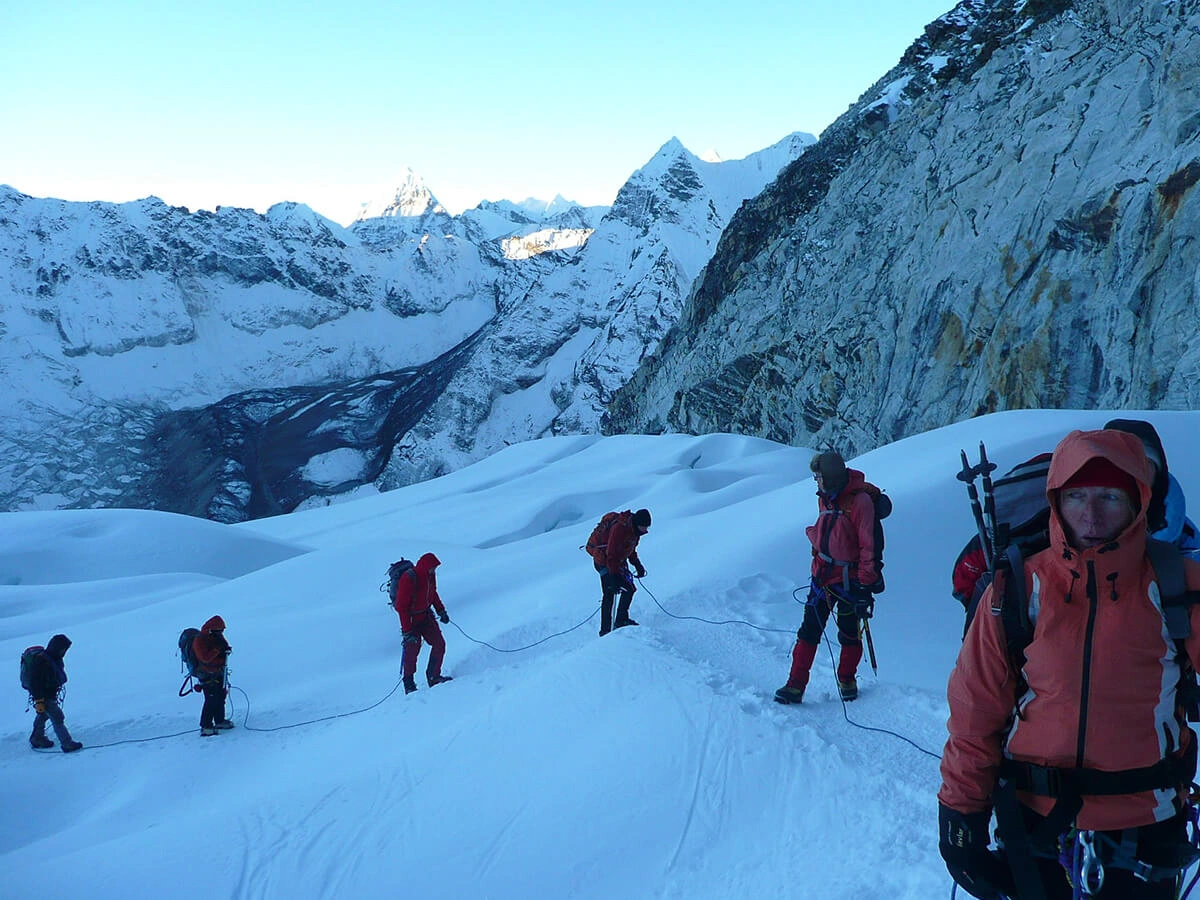
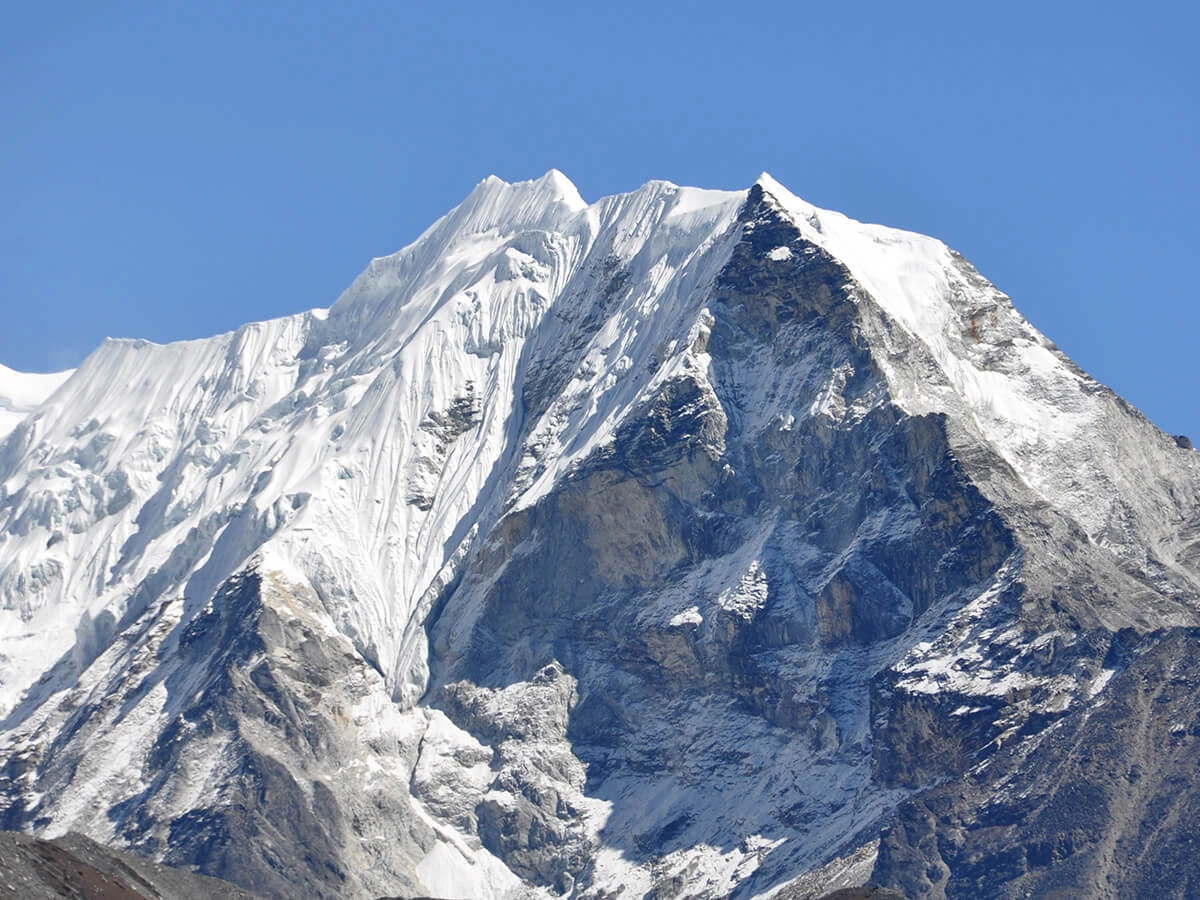
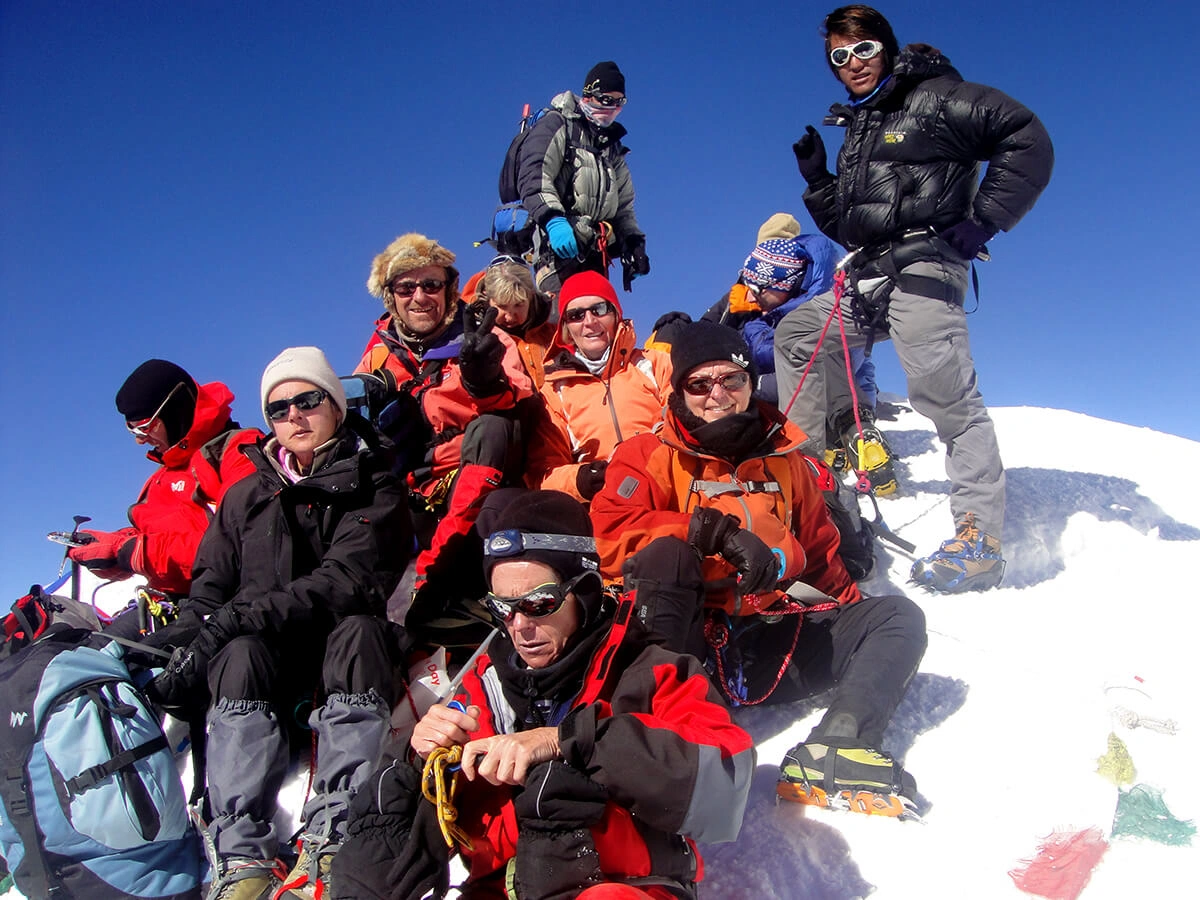
Island Peak Climbing is one of the popular peaks climbing in Nepal. Summiting Island Peak is a great choice for beginner trekkers. Moreover, many trekkers and mountaineers summit Island Peak before summiting major peaks like Everest and Kanchenjunga as a warm-up. Island Peak Climbing is little challenging than the Everest Base Camp, yet the view it presents is totally worth climbing.
This adventurous journey will include beautiful dense forests of rhododendrons, juniper, oak, birch & conifer, lovely small rivers, thrilling suspension bridges, picturesque villages & valleys, moraines, and lots of ascends & descends on steep, rugged, icy, and rocky paths. You will get to see panoramic views of the Himalayan mountains like Mt. Everest (8,848 m), Mt. Lhotse (8,516 m), Mt. Nuptse (7,861 m), Mt. Thamserku (6,623 m), Mt. Ama Dablam (6,812 m), Mt. Pokalde (5,806 m), and many more. Locals of this region are generally Sherpa, Rai, Limbu. They have their own dialect, tradition, culture, and way different lifestyle than us.
In 1953, the southwest summit of Imja Tse (Island Peak) was first climbed as part of a training exercise by a British expedition team that went on to summit Mt. Everest. However, the main summit was climbed by Hans-Rudolf Von Gunten and two unknown Sherpas (member of Swiss team who second climbed Everest after Tenzing & Eadmund and first climbed Lhotse) in 1956.
Best Time to Summit Island Peak
Spring (March-May) and Autumn (September-November) is the best time to summit Island Peak. During Spring and Autumn, the region presents captivating views of the mountain landscapes and trail also become extremely beautiful. You can also go on this trip during winter but the harsh cold weather might not fit for everyone.
Food and Accommodation during Island Peak Climbing
During Island Peak Climbing, you will stay in 2 or 3 stars hotel in Kathmandu and in lodge/camp during the Island Peak Climbing. All the rooms will be on twin sharing basis. You will only get breakfast in Kathmandu. There will also be welcome and farewell dinner in Kathmandu. While on the trek the food will be served according to the menu of the lodge. During your stay in camp, food will be prepared and served by the crew members.
Similarly, drinking water is easily available everywhere. You can carry reusable water bottle and water purification tablets to double check the quality of waters. We highly encourage you not to buy water bottle during the trip as it helps in preservation of the region.
Is Island Peak Climbing difficult?
Island Peak Climbing is a strenuous journey in the Himalayas. Island Peak Climbing will provide you with the ground knowledge and experience before going on an expedition to the world's highest mountains.
You don't need to have prior trekking experience to do this climbing. However, every day you have to trek for around 5 to 6 hours, and on the day of the summit, you are also needed to trek 8 to 10 hours a day, which does require strong physical fitness, determination, and good stamina. We will also provide you with pre-climbing training where you will learn proper use of gears like harness, crampons, rope, are, extra that will help you boost your confidence.
Achievement after Island Peak
Island Peak Climbing will let you know the basic mountaineering skills. You will get to experience the enchanting beauty of this isolated region along with the tradition and lifestyle of the locals. You will learn to work as a team player, survive in the extreme region, and make new friends. You will return with the lifelong memories that will stay with you forever.
Highlights
- Namche Bazar and glorious views of the world's highest mountains from the Everest View Hotel
- Beautiful trail covered with rhododendron, pine, oak & juniper forests
- Gorgeous landscapes
- Tengboche Monastery
- Island Peak Base Camp
- Panoramic views of Mt. Everest (8,848 m), Mt. Ama Dablam (6,812 m), Mt. Lhotse (8,516 m), Mt. Nuptse (7,816 m), Island Peak (6,189 m), and many other mountains